
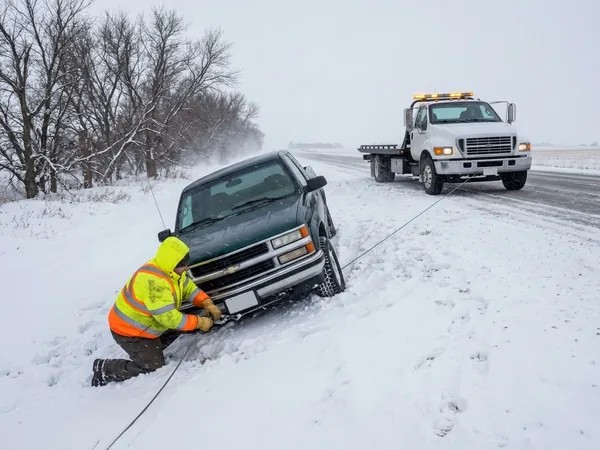
Omaha winters put a lot of cars in ditches
Freezing rain on the I-680 ramps, drifting snow on the open roads out by Bennington and Gretna, packed ice on the hills in Midtown. Every winter storm leaves cars in medians, ditches and snowbanks across the metro. A winch-out gets you back on the pavement quickly and costs less than a full tow, so it's usually the first thing we try.
Big storm on the way? See snowstorm & flood towing for what to do in a snow emergency, an ice storm or a flood.
What a winch-out is
The truck stays on solid ground and runs a steel cable or synthetic line to a proper recovery point on your vehicle. Using snatch blocks and the right angle, the driver pulls the vehicle out slowly and under control, without yanking bumpers off or bending suspension parts.
We pull vehicles out of
- Snowbanks and drifts after plows go by
- Roadside ditches and medians after a slide-off
- Mud: construction sites, soft shoulders, spring fields
- Yards and lawns, like a truck that sank after rain
- Gravel roads and farm lanes in the rural edges of the metro
- Boat ramps and parking lots where a trailer slid
Before we arrive
- Stop spinning the tiresIt digs deeper, heats the tires, and can damage the transmission.
- Check the exhaustIf you're sitting in a snowbank with the engine running, make sure the tailpipe is clear of snow.
- Stay in the car if you're near trafficBuckled in, hazards on. Get out only if you can get well away from the road.
- Tell us how deep it isA photo helps: a nose-down ditch needs different gear than a car sitting on snow.
When a winch-out becomes a tow
If the slide bent a wheel or broke suspension, or the car won't run after we get it out, we can tow it straight to wherever you choose. See accident towing.